Advanced Non-Surgical Treatment for Uterine Fibroids
Uterine fibroids are common non-cancerous growths that develop in the uterus and can cause heavy bleeding, pelvic pain, bloating, and fertility-related concerns. Uterine Artery Embolization (UAE), also known as Uterine Fibroid Embolization (UFE), is a minimally invasive, uterus-preserving treatment that effectively shrinks fibroids without major surgery.
Performed by an Interventional Radiologist, UAE offers faster recovery, minimal scarring, and excellent symptom relief for many women.
What Are Uterine Fibroids?
Fibroids are benign growths made of muscle and fibrous tissue that develop in or around the uterus. They vary in size and number and may affect women during reproductive age.
Common Symptoms of Fibroids
- Heavy or prolonged menstrual bleeding
- Pelvic pain or pressure
- Abdominal bloating
- Frequent urination
- Back or leg pain
- Pain during intercourse
- Fatigue due to anemia
- Fertility or pregnancy-related issues in some cases
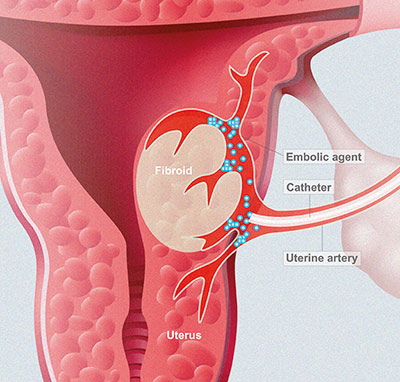
What Is Uterine Artery Embolization (UAE)?
UAE is a minimally invasive image-guided procedure that blocks the blood supply to uterine fibroids, causing them to shrink gradually over time.
Tiny embolic particles are injected into the uterine arteries through a small catheter inserted from the wrist or groin. By cutting off blood flow, the fibroids shrink while preserving the uterus.
Benefits of UAE for Fibroids
- Non-surgical treatment option
- Uterus-preserving procedure
- No large surgical cuts
- Minimal scarring
- Faster recovery time
- Short hospital stay
- Reduced pain and bleeding
- Quick return to normal activities
- Effective long-term symptom relief
Who May Benefit from UAE?
UAE may be suitable for women who:
- Have symptomatic uterine fibroids
- Experience heavy menstrual bleeding
- Want to avoid hysterectomy or surgery
- Have pelvic pressure or pain
- Need a minimally invasive treatment option
- Are not suitable candidates for surgery
How Is the Procedure Performed?
Step 1: Evaluation & Imaging
MRI or ultrasound imaging is performed to assess the size and location of fibroids.
Step 2: Catheter Placement
A tiny catheter is inserted into an artery in the wrist or groin under local anesthesia.
Step 3: Embolization
Tiny particles are delivered into the uterine arteries to block blood flow to the fibroids.
Step 4: Recovery
Patients are usually discharged within 24 hours and recover much faster than traditional surgery.
Recovery After UAE
- Mild pelvic pain or cramping may occur temporarily
- Most patients resume normal activities within a few days
- Fibroids gradually shrink over weeks to months
- Menstrual symptoms typically improve significantly
- Follow-up imaging may be recommended
Why Choose Us?
- Expertise in advanced fibroid embolization procedures
- Minimally invasive women’s health treatments
- State-of-the-art imaging guidance
- Personalized patient-focused care
- Faster recovery with minimal downtime
- Comprehensive pre- and post-procedure support