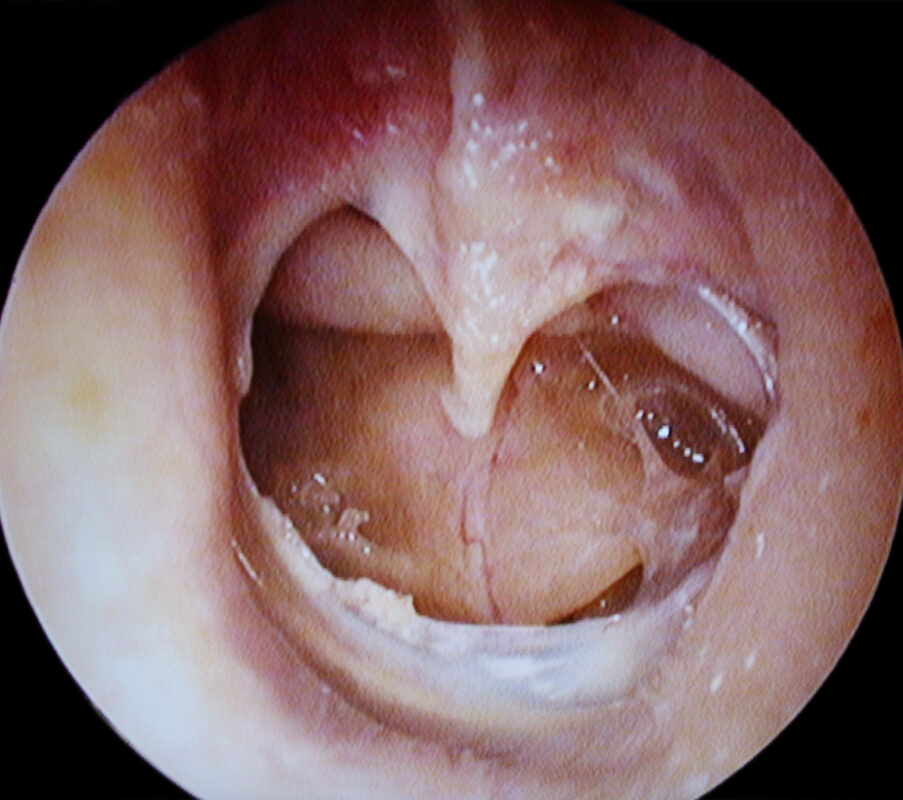
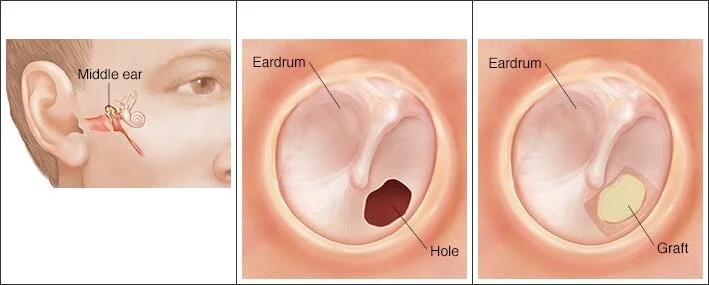
An eardrum perforation is a hole or tear in the Tympanic Membrane, which separates the outer ear from the middle ear. This condition can affect hearing and make the ear more vulnerable to infections.
What is Tympanoplasty?
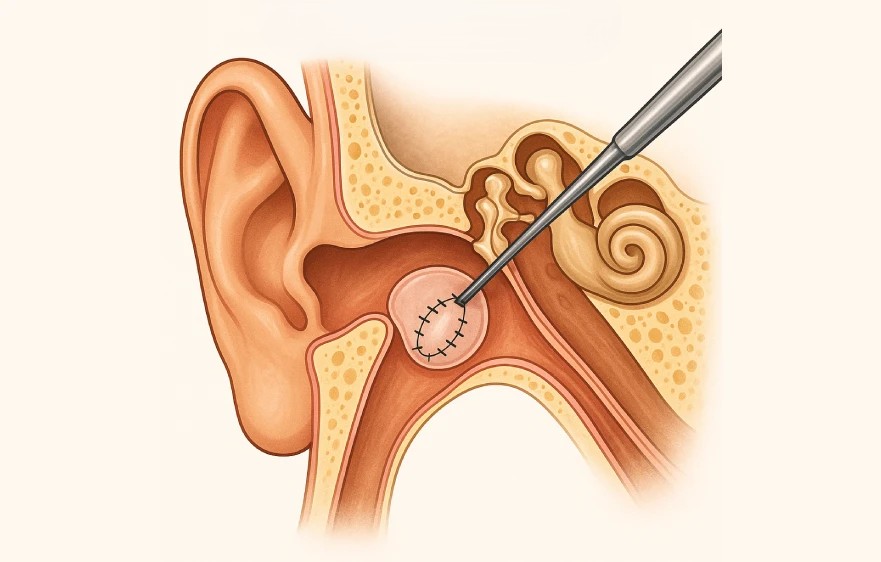
Tympanoplasty is a surgical procedure performed to repair a perforated eardrum. The surgery involves closing the hole using a graft (usually taken from the patient’s own tissue) to restore the integrity and function of the eardrum.
Causes of Eardrum Perforation
Chronic ear infections (Chronic Otitis Media)
Trauma or injury to the ear
Sudden loud noises (acoustic trauma)
Insertion of foreign objects (cotton buds, etc.)
Pressure changes (barotrauma during flights or diving)
Symptoms
Hearing loss
Ear discharge (sometimes foul-smelling)
Ear pain or discomfort
Ringing in the ear (tinnitus)
Occasional dizziness
Who Needs Tympanoplasty?
This procedure is recommended for patients who:
Have a persistent eardrum perforation that does not heal naturally
Experience hearing loss due to the perforation
Suffer from recurrent ear infections
Want to prevent water entering the middle ear
Benefits of Tympanoplasty
Improves hearing ability
Prevents recurrent ear infections
Restores normal ear structure
Protects the middle ear from water and bacteria
Enhances overall quality of life
How is the Procedure Performed?
Usually done under local or general anesthesia
The surgeon places a graft (often from tissue behind the ear)
The graft is positioned to cover the perforation
The procedure typically takes 1–2 hours
Most patients can go home the same day or next day
Recovery and Aftercare
Mild discomfort or fullness in the ear is normal
Avoid water entry into the ear
Refrain from blowing the nose forcefully
Follow prescribed medications and attend follow-up visits
Hearing improvement may be gradual over a few weeks
Success Rate and Risks
Tympanoplasty has a high success rate (80–90% in most cases). However, rare risks may include:
Infection
Graft failure
Persistent hearing loss
Dizziness (temporary)
When to Consult an ENT Specialist?
Seek medical advice if you notice:
Persistent ear discharge
Reduced hearing
History of ear injury
Recurrent ear infections
Why Choose Tympanoplasty?
Timely surgical repair helps restore hearing, prevent complications, and improve overall ear health. Tympanoplasty is a safe and effective solution for long-term relief from eardrum perforations.