Advanced Minimally Invasive Care for Lymphatic Disorders
The lymphatic system plays a vital role in maintaining fluid balance and supporting the body’s immune system. Disorders affecting the lymphatic system can lead to swelling, fluid leakage, infections, and other serious complications. Modern Interventional Radiology offers advanced minimally invasive lymphatic procedures that help diagnose and treat these conditions with precision and faster recovery.
Lymphangiography and lymphatic interventions are specialized image-guided procedures used to identify and manage abnormalities within the lymphatic system.
What Is Lymphangiography?
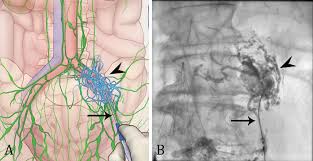
Lymphangiography is an advanced imaging procedure used to visualize lymphatic vessels and lymph nodes. A special contrast dye is injected into the lymphatic system to identify leaks, blockages, or abnormal lymphatic flow.
This procedure helps diagnose complex lymphatic disorders and guides further treatment planning.
Conditions Treated with Lymphatic Interventions
Lymphatic Leak Disorders
- Chylothorax
- Chylous ascites
- Post-surgical lymphatic leaks
- Lymphocele
Swelling & Fluid Disorders
- Lymphedema
- Persistent fluid collections
- Recurrent pleural or abdominal fluid accumulation
Other Lymphatic Conditions
- Congenital lymphatic abnormalities
- Trauma-related lymphatic injury
- Cancer-related lymphatic obstruction
Advanced Lymphatic Interventions
Diagnostic Lymphangiography
Detailed imaging of lymphatic channels to identify abnormalities or leakage sites.
Thoracic Duct Embolization
A minimally invasive procedure used to seal abnormal lymphatic leaks, especially in chylothorax.
Lymphatic Embolization
Targeted embolization techniques used to stop lymphatic leakage and manage fluid accumulation.
Image-Guided Drainage Procedures
Drainage of lymphatic fluid collections using ultrasound or CT guidance.
Lymphatic Reconstruction Procedures
Advanced interventions aimed at restoring or improving lymphatic flow in selected patients.
Benefits of Minimally Invasive Lymphatic Procedures
- Minimally invasive treatment
- No major surgery
- Faster recovery time
- Reduced hospital stay
- Precise image-guided treatment
- Less pain and discomfort
- Effective management of complex lymphatic leaks
- Improved quality of life
Who May Need Lymphatic Interventions?
You may benefit from lymphangiography or lymphatic interventions if you:
- Have persistent lymphatic fluid leakage
- Experience unexplained swelling or lymphedema
- Develop fluid accumulation after surgery
- Have recurrent pleural or abdominal fluid collections
- Need advanced evaluation of lymphatic disorders
- Require non-surgical treatment options
How Are These Procedures Performed?
Step 1: Imaging & Evaluation
Advanced imaging studies are used to evaluate the lymphatic system.
Step 2: Contrast Injection
A specialized contrast agent is introduced into the lymphatic channels for detailed visualization.
Step 3: Targeted Intervention
If abnormalities are identified, minimally invasive techniques such as embolization or drainage may be performed during the same session.
Step 4: Recovery
Most patients recover quickly with minimal downtime and shorter hospital stay.
Why Choose Us?
- Expertise in advanced lymphatic interventions
- State-of-the-art imaging technology
- Specialized minimally invasive procedures
- Personalized treatment planning
- Multidisciplinary patient care
- Focus on safety, precision, and faster recovery