

Endoscopic Skull Base Surgeries
What are Endoscopic Skull Base Surgeries?
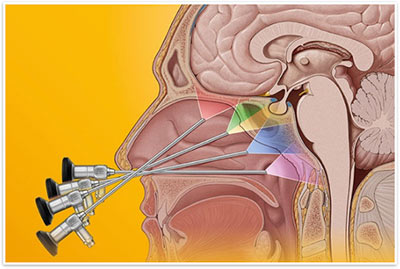
Endoscopic Skull Base Surgery is an advanced, minimally invasive technique used to treat conditions at the base of the skull using a nasal endoscope. This approach allows surgeons to access complex areas of the skull without external incisions, reducing trauma and improving recovery.
What Conditions Can Be Treated?
These surgeries are commonly performed to manage:
- Skull base tumors
- Pituitary tumors (Pituitary Tumors)
- Cerebrospinal fluid leaks (CSF Rhinorrhea)
- Meningoceles and encephaloceles
- Certain sinus and orbital tumors
Why is This Surgery Recommended?
Endoscopic skull base surgery is advised when:
- A tumor or lesion is located deep within the skull base
- Traditional open surgery poses higher risks
- Minimally invasive access can safely remove or repair the condition
- There is a need to preserve surrounding critical structures like nerves and blood vessels
Benefits of Endoscopic Skull Base Surgery
- No external cuts or visible scars
- Minimally invasive with less tissue damage
- Faster recovery and shorter hospital stay
- Reduced pain and complications
- Better visualization with high-definition endoscopes
How is the Procedure Performed?
- Conducted under general anesthesia
- A thin endoscope is inserted through the nostrils
- Specialized instruments are used to access the skull base
- The tumor or defect is carefully removed or repaired
- Reconstruction may be done using grafts if needed
- Procedure duration varies from 2–6 hours, depending on complexity
Recovery and Aftercare
- Hospital stay may be required for monitoring
- Mild nasal congestion or discomfort is common
- Avoid heavy lifting and straining
- Follow nasal care instructions and medications
- Regular follow-ups and imaging may be needed
Risks and Safety
Although advanced and safe, potential risks may include:
- Bleeding
- Infection
- Leakage of cerebrospinal fluid
- Temporary nasal symptoms
- Rarely, damage to nearby structures
When to Consult a Specialist?
You should seek expert evaluation if you experience:
- Persistent nasal blockage or unusual symptoms
- Diagnosed skull base tumor or lesion
- Clear watery discharge from the nose
- Vision problems or unexplained headaches
Why Choose Endoscopic Skull Base Surgery?
This modern surgical approach offers a safer, more precise alternative to traditional open surgery. It allows effective treatment of complex skull base conditions with minimal discomfort and faster recovery.

