Advanced Minimally Invasive Treatment for Coughing Blood
Hemoptysis, or coughing up blood, can be a serious and potentially life-threatening condition caused by diseases affecting the lungs or airways. Bronchial Artery Embolization (BAE) is a highly effective, minimally invasive procedure used to control and stop bleeding from the lungs without major surgery.
Performed by an Interventional Radiologist, BAE uses advanced imaging guidance to identify and block the abnormal blood vessels responsible for bleeding.
What Is Hemoptysis?
Hemoptysis refers to coughing up blood from the respiratory tract. The amount of bleeding may vary from small blood-streaked sputum to severe bleeding that requires emergency treatment.
Common Causes of Hemoptysis
- Tuberculosis (TB)
- Bronchiectasis
- Lung infections
- Chronic lung disease
- Lung tumors
- Fungal infections
- Pulmonary vascular abnormalities
- Trauma or inflammation
Symptoms That Require Medical Attention
- Coughing up blood repeatedly
- Large amount of blood in sputum
- Shortness of breath
- Chest pain
- Fever with bleeding
- Dizziness or weakness
- Sudden worsening of lung symptoms

What Is Bronchial Artery Embolization (BAE)?
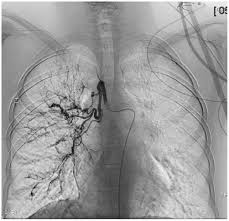
Bronchial Artery Embolization is a minimally invasive image-guided procedure used to stop bleeding in the lungs.
During the procedure, a tiny catheter is inserted through an artery in the wrist or groin and guided to the abnormal bronchial arteries supplying the bleeding area. Tiny embolic particles are then injected to block the bleeding vessels safely and effectively.
Benefits of BAE
- Minimally invasive procedure
- No major surgery required
- Rapid control of bleeding
- Faster recovery time
- Reduced risk compared to surgery
- Short hospital stay
- Can be life-saving in emergency situations
Who May Need BAE?
Bronchial Artery Embolization may be recommended for patients who:
- Have recurrent or severe hemoptysis
- Are coughing blood due to lung disease
- Are not suitable candidates for surgery
- Require emergency bleeding control
- Have persistent bleeding despite medication
How Is the Procedure Performed?
Step 1: Imaging & Evaluation
CT scan and angiography are used to identify the source of bleeding.
Step 2: Catheter Placement
A small catheter is inserted through a tiny puncture under local anesthesia.
Step 3: Embolization
The abnormal bleeding vessels are blocked using tiny embolic particles.
Step 4: Recovery
Patients are monitored after the procedure, and most recover quickly with significant reduction or complete control of bleeding.
Recovery After BAE
- Most patients experience rapid symptom improvement
- Hospital stay is usually short
- Follow-up imaging may be recommended
- Additional treatment may be needed for the underlying lung condition
Why Choose Us?
- Expertise in emergency and advanced embolization procedures
- State-of-the-art imaging and angiography technology
- Rapid diagnosis and treatment approach
- Focus on safety and minimally invasive treatment