


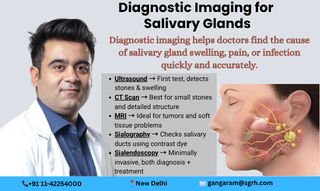
Best Diagnostic Imaging for Salivary Glands
Introduction
Best diagnostic imaging for salivary glands is an advanced and essential diagnostic method used to evaluate various conditions affecting the salivary glands, including infections, tumors, stones, and duct blockages. The salivary glands—parotid, submandibular, and sublingual—play a crucial role in digestion and maintaining oral health. When symptoms like swelling, pain, or dry mouth occur, best diagnostic imaging for salivary glands helps doctors identify the exact cause and plan effective treatment at an early stage.
Advanced Imaging Techniques
With modern advancements, best diagnostic imaging for salivary glands has become more accurate, safe, and efficient. Doctors commonly use salivary gland ultrasound, salivary gland CT scan, and salivary gland MRI as part of a complete salivary gland imaging test. These techniques provide detailed visualization and support accurate salivary gland diagnosis for better outcomes.
Types of Diagnostic Imaging for Salivary Glands
Ultrasound Imaging
Ultrasound is the first step in gland evaluation and an important part of best diagnostic imaging for salivary glands. It is non-invasive, painless, and radiation-free. Salivary gland ultrasound helps detect stones, swelling, and infections quickly.
CT Scan Imaging
A salivary gland CT scan provides detailed cross-sectional images and improves the accuracy of best diagnostic imaging for salivary glands, especially in detecting tumors and deep infections.
MRI Imaging
A salivary gland MRI is ideal for soft tissue evaluation. It offers high-resolution images and plays a key role in best diagnostic imaging for salivary glands for complex conditions.
Sialography
This technique evaluates salivary ducts using contrast dye and enhances overall salivary gland diagnosis.
Nuclear Medicine Scan
This method evaluates gland function and supports best diagnostic imaging for salivary glands in identifying functional disorders.
Imaging Overview
| Imaging Type | Purpose | Benefit |
|---|---|---|
| Ultrasound | Detect stones & swelling | Quick & safe |
| CT Scan | Detailed imaging | Accurate results |
| MRI | Soft tissue analysis | Best for tumors |
| Sialography | Duct evaluation | Detects blockage |
| Nuclear Scan | Functional assessment | Detects dysfunction |
Why This Imaging is Important
Early diagnosis ensures better treatment outcomes. Best diagnostic imaging for salivary glands helps doctors detect problems early and differentiate between benign and serious conditions. A proper salivary gland imaging test ensures accurate diagnosis and targeted treatment planning.
Benefits
✔ Early and accurate diagnosis
✔ Safe and non-invasive procedures
✔ Detailed and precise imaging
✔ Helps in effective treatment planning
✔ Quick and reliable results
✔ Reduces complications
✔ Monitors treatment progress
✔ Improves patient outcomes
Who Should Consider This Test?
You may need best diagnostic imaging for salivary glands if you experience:
- Swelling near jaw or neck
- Pain while eating
- Dry mouth
- Difficulty swallowing
- Lump near salivary glands
These symptoms require timely salivary gland diagnosis using advanced imaging methods.
FAQs
Q1. What is diagnostic imaging for salivary glands?
It includes tests like ultrasound, CT scan, and MRI for accurate diagnosis.
Q2. Is salivary gland ultrasound safe?
Yes, it is safe, painless, and radiation-free.
Q3. When is MRI required?
MRI is used for detailed soft tissue imaging and tumor detection.
Q4. How long does the test take?
Most imaging tests take 15–45 minutes.
Q5. What conditions can be detected?
It helps detect stones, infections, tumors, cysts, and duct blockages.
Q6. Is Best Diagnostic Imaging for Salivary Glands painful?
No, best diagnostic imaging for salivary glands procedures like ultrasound, CT scan, and MRI are generally painless and comfortable for patients. Some tests may involve mild discomfort, but they are safe and well-tolerated.
Q7. Do I need any preparation before salivary gland imaging test?
Preparation depends on the type of test. For most best diagnostic imaging for salivary glands, no special preparation is needed, but your doctor may advise fasting or avoiding certain medications before CT or MRI scans.
Conclusion
Best diagnostic imaging for salivary glands is essential for early detection and accurate diagnosis of gland-related problems. With advanced techniques, doctors can ensure effective treatment, faster recovery, and improved health outcomes.
👉 Book your diagnostic imaging for salivary glands today and get accurate diagnosis with advanced medical technology!