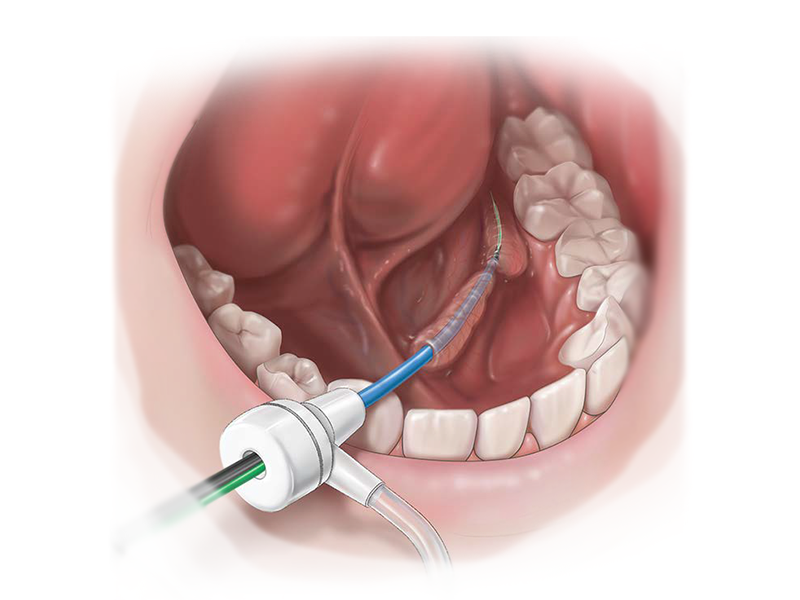
Sialendoscopy is a minimally invasive procedure used to diagnose and treat disorders of the salivary glands. It involves inserting a very thin endoscope into the salivary ducts to visualize and manage blockages without the need for open surgery.
What Conditions Can Be Treated?
Sialendoscopy is commonly used to treat:
Salivary gland stones (Sialolithiasis)
Ductal blockages or narrowing
Recurrent salivary gland infections
Chronic swelling of salivary glands
Symptoms Indicating Sialendoscopy
Pain and swelling in the salivary glands (especially during meals)
Dry mouth or reduced saliva flow
Recurrent infections of the salivary glands
Tenderness or discomfort in the jaw or neck area
Benefits of Sialendoscopy
Minimally invasive (no external cuts)
Preserves the salivary gland
Quick recovery and minimal discomfort
Effective removal of stones and blockages
Reduced risk of complications compared to traditional surgery
How is the Procedure Performed?
Usually performed under local or general anesthesia
A tiny endoscope is inserted into the salivary duct
Small instruments are used to remove stones or widen the duct
The procedure typically takes 30–60 minutes
Recovery and Aftercare
Most patients return home the same day
Mild swelling or discomfort may occur temporarily
Hydration and gland massage may be advised
Normal activities can usually be resumed quickly
Risks and Safety
Sialendoscopy is a safe and advanced procedure. Rare risks may include:
Minor swelling or infection
Temporary duct irritation
Very rarely, recurrence of blockage
When to Consult a Specialist?
Seek medical advice if you experience:
Recurrent swelling in the jaw or under the tongue
Pain while eating
Dry mouth or reduced saliva
Repeated salivary gland infections
Why Choose Sialendoscopy?
Sialendoscopy offers a modern, gland-preserving solution for salivary gland disorders. It avoids major surgery while providing effective relief and faster recovery.